Next Year in Havana by Chanel Cleeton

Next Year in Havana by Chanel Cleeton

After the death of her beloved grandmother, a Cuban-American woman travels to Havana, where she discovers the roots of her identity–and unearths a family secret hidden since the revolution…

Havana, 1958. The daughter of a sugar baron, nineteen-year-old Elisa Perez is part of Cuba’s high society, where she is largely sheltered from the country’s growing political unrest–until she embarks on a clandestine affair with a passionate revolutionary…

Miami, 2017. Freelance writer Marisol Ferrera grew up hearing romantic stories of Cuba from her late grandmother Elisa, who was forced to flee with her family during the revolution. Elisa’s last wish was for Marisol to scatter her ashes in the country of her birth. 

Arriving in Havana, Marisol comes face-to-face with the contrast of Cuba’s tropical, timeless beauty and its perilous political climate. When more family history comes to light and Marisol finds herself attracted to a man with secrets of his own, she’ll need the lessons of her grandmother’s past to help her understand the true meaning of courage.

Book Overview:

Author: Chanel Cleeton | Series: None (although sequel came out recently, no official name for series | Format: Audiobook | Narrated by: Kyla Garcia & Frankie Maria Corzo | Length: 11 hours and 16 minutes | Publish Date: February 6, 2018 | Genre: Historical Fiction & Romance | Literary Awards: Goodreads Choice Award Nominee for Historical Fiction (2018) | Rating: ★ ★ ★ ★ ★ | Recommend: Heck Yes!

“Life is too short to be unhappy, to play it safe. To do what is expected of you rather than follow your heart”


I don’t know what took me so long to review this book since I couldn’t stop talking about it while I was listening to it. I even told my mom about it and recommended it to her. Then someone told me that she wrote a sequel to this book from Beatriz’s perspective and I flipped out. I absolutely fell in love with this book, and both Elisa and Marisol while they told their stories about Cuba, and what happened to them while they were there.

One of my favorite things about this book was that it seamlessly transferred us back and forth between Elisa’s Cuba and Marisol’s Cuba. While it may seem like the years between the two don’t always have a big affect on how a country changes, it was important to note that the Cuba that Marisol grew up learning about was completely different from the Cuba that she actually went to see, and even more different from the Cuba that Elisa and the entire Perez family lived and left back when Fidel Castro took control. I felt for Elisa so much dealing with the revolution and the war, being in the heart of it and being personally affected by it due to her family’s status. All of the Perez family felt it, and suffered in some shape or form for being associated with the corrupt ruler of Cuba – not Fidel but someone just as bad. Elisa was only nineteen years old when this was going on, part of a wealthy Cuban family that was sheltered from what was really going on. She had to grow up extremely fast, and leaving her country behind was probably the beginning of her new journey in life.

Marisol on the other hand is going to Cuba for the first time, with the intent of finding the perfect spot for her Grandmother Elisa to rest in peace. Unfortunately, Elisa (the one and the same) never did get to go back to Cuba like they promised, so spreading her ashes in her home will have to honor her dream. From there, Marisol is learning that the Cuba that she learned about growing up is not the same, and despite the death of Fidel Castro and the political unrest not nearly the same as it was during her grandmother’s time, it is still dangerous for a Cuban-American girl to start asking questions. Especially if they find out which family she came from. Can she survive knowing that this isn’t what she was expecting? Can she make it out of Cuba alive?

Elisa and Marisol are both strong women, so proud of their Cuban heritage and not afraid of showing it. They also know who they are, who they want to be, and even if their lives didn’t always follow in the path of their family’s images of them, they stood up for themselves in some aspect. I loved hearing about how Elisa would tell Marisol about Cuba, and I loved how Marisol knew about certain places in Cuba that Elisa loved to see when she lived there, like the Malecon. I felt love for both of them, and I felt like both of their stories were just wonderful.

I keep saying that I don’t usually read historical fiction adult books, and yet here’s another one that ended up reading and loving. I may end up buying this book so I can go back and revisit Cuba from Elisa’s and Marisol’s eyes. I can’t wait to see what Beatriz was up to during the Cuban Revolution, as I feel like she was one character that didn’t get enough “screen time”. To have a whole novel dedicated to her is a dream come true. I highly recommend this book, even if you think historical fiction isn’t your thing. You may be surprised at what you find.
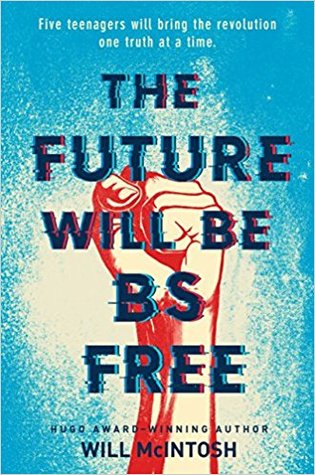
The Future Will Be BS-Free by Will McIntosh (ARC Review)

The Future Will Be BS-Free by Will McIntosh (ARC Review)

In this terrifyingly timely tale for fans of The Eye of Minds, a teen and his group of friends find themselves on the run after using a genius lie-detector contraption to expose their corrupt government.

In a Putin-esque near-future America, the gifted and talented high school has just been eliminated, and Sam and his friends have been using their unexpected free time to work on a tiny, undetectable, utterly reliable lie detector. They’re all in it for the money–except Theo, their visionary. For Theo, it’s about creating a better world. A BS-free world, where no one can lie, and the honest will thrive.

Just when they finish the prototype and turn down an offer to sell their brainchild to a huge corporation, Theo is found dead. Greedy companies, corrupt privatized police, and even the president herself will stop at nothing to steal the Truth App. Sam sets his sights on exposing all lies and holding everyone accountable.

But he and his friends quickly realize the costs of a BS-free world: the lives of loved ones, and political and economic stability. They now face a difficult question: Is the world capable of operating without lies, or are lies what hold it together?

Book Overview:

Author: Will McIntosh | Series: None | Format: Hardcover – ARC | Length: 352 pages | Publish Date: July 24, 2018 | Genre: YA Dystopia | Rated: ★ ★ ★| Recommend: Maybe


“Powerful people aren’t smarter or more capable than the rest of us; they’re just more willing to lie, cheat, steal, even kill.”


Disclaimer: I received a copy of this book from Netgalley in exchange for an honest review.

One of the scariest things about this book is that it doesn’t feel too far off from what I think America will be like, but that’s besides the point.

McIntosh brings a version of the United States to life in this book, where the country is so devastated financially that even high schools are shut down because they lack funding. Once the funding is gone, the students aren’t allowed to come back, and the teachers are quickly displaced. People are homeless in the hundreds, trying to survive in a place where there is barely anything to work for. It’s a nightmare, and it seems like it’s thanks to their current President. For one, President Vitnik had no political experience prior to being elected (sound familiar?) and has convinced the Legislature to get rid of the two term limit enforced after FDR held a record four-term Presidency. Now the county is in the hands of this president that has monopolized on the country’s lack of resources by being one of its main suppliers – literally everything has her face and name – while the country continues to suffer.

In comes Sam Gregorious – lovely name – and his five friends that now have a lot more free time on their hands to invent a lie detector that doesn’t rely on someone’s heart rate, but is 100% more reliable than anything we have ever seen before. Dubbed the “Truth App”, Sam and his team started off their journey to create the truth app to make a boat load of money and get their families out of poverty, while Theo wants to create a “bullshit-free world” where corruption will fall and the honest will rise. Theo was the only one that saw their invention as something more than an instant cash cow, and of course he was the one that was murdered by those that sought to shut their invention down. FYI, that’s not a spoiler since it’s in the synopsis, but it still sucks.

Throughout the entire journey, the book moved way too fast for me. Not one that made me want to find out what happened next, but one where I was always wondering why a chapter ended the way it did, or started the way it did. It didn’t seem cohesive, but I could at least follow what was happening. Scenes jumped so quickly that you were left wondering what happened in the middle – or why it seems like those specific scenes were deemed important.

It was also difficult to sympathize with Sam, or wonder why he was the one that was “in charge” of this whole thing. Theo truly was the brains, and throughout the book I didn’t see what made Sam the leader, if he ever was one. He was the scapegoat, the one that the others chose to blame when “shit hit the fan” and all other disastrous events took place, but did they really show him respect at all? Not really. Was it just because Theo was murdered and they had nobody else to fall behind? He didn’t seem like the type that his friends really rallied behind at all. Not to mention he seemed completely obsessed with Molly, his crush since forever that didn’t like him back, and that seemed to have gotten in the way of a good storytelling. There was a love triangle for no reason, and the only reason why it had any merit was because it fractured the dynamic of the group for such a ridiculous reason. It was not needed, but teen boys seem to be girl-centric when the world is going up in flames.

I think this would have probably made an interesting TV movie, or movie in general, and while I liked the concept of the story, I felt like it could have been explored more. The ending was nice, and I’m glad things will hopefully start to work out again for the United States, but maybe having more of what happened before, and why Vitnik did what she did could be some bonus content for us to feel better about this story.

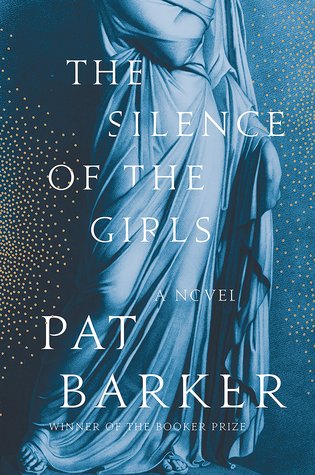
The Silence of the Girls by Pat Barker

The Silence of the Girls by Pat Barker

The ancient city of Troy has withstood a decade under siege of the powerful Greek army, which continues to wage bloody war over a stolen woman—Helen. In the Greek camp, another woman—Briseis—watches and waits for the war’s outcome. She was queen of one of Troy’s neighboring kingdoms, until Achilles, Greece’s greatest warrior, sacked her city and murdered her husband and brothers. Briseis becomes Achilles’s concubine, a prize of battle, and must adjust quickly in order to survive a radically different life, as one of the many conquered women who serve the Greek army.

When Agamemnon, the brutal political leader of the Greek forces, demands Briseis for himself, she finds herself caught between the two most powerful of the Greeks. Achilles refuses to fight in protest, and the Greeks begin to lose ground to their Trojan opponents. Keenly observant and coolly unflinching about the daily horrors of war, Briseis finds herself in an unprecedented position, able to observe the two men driving the Greek army in what will become their final confrontation, deciding the fate not only of Briseis’s people but also of the ancient world at large.

Briseis is just one among thousands of women living behind the scenes in this war—the slaves and prostitutes, the nurses, the women who lay out the dead—all of them erased by history. With breathtaking historical detail and luminous prose, Pat Barker brings the teeming world of the Greek camp to vivid life. She offers nuanced, complex portraits of characters and stories familiar from mythology, which, seen from Briseis’s perspective, are rife with newfound revelations. Barker’s latest builds on her decades-long study of war and its impact on individual lives—and it is nothing short of magnificent.

Book Overview:

Author: Pat Barker | Series: None | Format: Audiobook | Narrated By: Kristin Atherton | Length: 10 hours and 45 minutes | Publish Date: September 4, 2018 | Genre: Historical Fiction | Literary Awards: Costa Book Award Nominee for Novel (2018), Women’s Prize for Fiction Nominee for Shortlist (2019) | Rating: ★ ★ ★ ★ | Recommend: Yes

“Great Achilles. Brilliant Achilles, shining Achilles, godlike Achilles … How the epithets pile up. We never called him any of those things; we called him ‘the butcher’.”

This one kind of broke my heart. I really am so glad that I got to read this one. It’s like we never hear about the losers in history, because most of the time they don’t get to tell their stories. So hearing about Briseis, a queen in her own right, one that had to deal with being Achilles’ “prize” for sacking her city and killing her husband and brothers really hit something in me.

I think I will always want to revisit this book even for years to come. Hearing about how Achilles was to the losing side of the war – at least for the time being – and how the Trojan women were treated in the Greek camp during this war. Everyone always talks about Helen, how hers was the face that launched a thousand ships, and Briseis even knew her – but nobody talks about the other women that were suffering at the hands of the Greeks. Nobody talks about what they had to endure being prisoners of war, and how they went from free women to slaves in a matter of hours.

I can’t get over this book, and although it’s been a long time since I read it, I’ll recommend it to anyone that wants to hear about the other side of the story. I felt for Briseis, I felt for Patroclus, I felt for Achilles (sometimes) and I really, really, really hated Agamemnon. But then again, who wouldn’t? Thanks to Pat Barker for giving a voice to the women history has seemed to forgot.